Old Bones: The Vintage Tattoo Font for Bold Branding
If you've ever admired the bold, timeless lettering on a classic sailor's tattoo or the signage of a 1950s barbershop, you understand a certain aesthetic. It’s a look built on confidence, tradition, and a touch of rebellion. That’s the exact spirit captured in Old Bones, a premium display font that channels the soul of traditional American tattoo studio culture into a powerful design tool for the modern creative. This isn't just another typeface; it's a piece of visual attitude, ready to bring character and weight to your next project.
More Than a Font: Capturing a Cultural Vibe
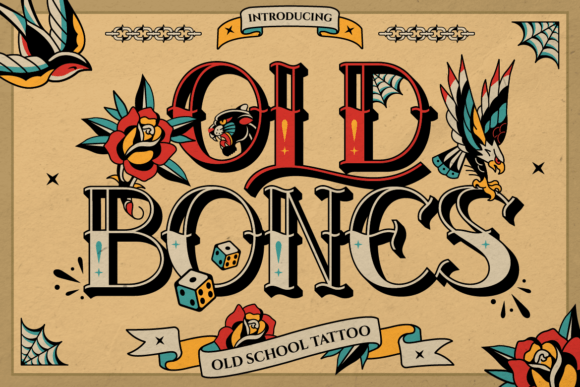
At its core, Old Bones is a serif font with a distinct personality. Its letterforms are crafted with the thick, confident strokes and subtle, organic imperfections you’d find in hand-painted tattoo flash sheets. The serifs are prominent and sturdy, giving each character a grounded, stable presence. This traditional American tattoo style doesn’t just sit on the page—it commands attention. The font comes equipped with two essential styles: Regular and 3D. The Regular style delivers that classic, flat ink look, perfect for crisp applications. The 3D variant, however, adds a dynamic shadow effect, instantly making your typography look bolder, more alive, and full of depth. This versatility makes Old Bones a surprisingly flexible creative font for projects that need to make an immediate impact.
Where Old Bones Truly Shines: Practical Applications
Understanding where a font like Old Bones fits best is key to using it effectively. Its inherent personality makes it a natural fit for specific industries and creative contexts. Think of businesses and projects where heritage, authenticity, and a bit of edge are part of the brand identity. For clothing brands with a rockabilly or vintage workwear vibe, using Old Bones in logo design or on hang tags instantly communicates a rugged, timeless quality. Barbershops and tattoo studios can leverage its style across their signage, appointment cards, and social media graphics to create a cohesive, professional atmosphere that resonates with their clientele.
Beyond physical spaces, this typeface excels in editorial design and packaging design. Imagine it on the cover of a craft beer label, the title of a food magazine feature on classic diners, or the masthead of a music blog. It’s perfect for creating eye-catching gig posters, album sleeves, and stickers where visual hierarchy and immediate recognition are crucial. Even for digital projects, Old Bones can be a powerful asset. Used sparingly for headlines on a website or in a hero image, it can set a definitive tone and engage an audience looking for something with real character.
Strategic Typography: Influence on Brand and Audience
Choosing a typeface is a strategic decision that directly influences how your message is received. Old Bones doesn’t just convey words; it conveys a feeling. In brand identity, consistency is everything. By using this font across your logos, menus, and marketing materials, you build a strong, recognizable visual language. It tells your audience that you value tradition and craftsmanship, and that your brand has a confident, unapologetic voice. This can significantly enhance brand perception, positioning your business as authentic and knowledgeable in its niche.
From a practical standpoint, readability is a consideration. As a display font, Old Bones is engineered for headlines, titles, and short bursts of impactful text—not for body copy. Using it for a paragraph would sacrifice legibility, but using it for a product name or a call-to-action button ensures those critical elements stand out. This is where understanding visual hierarchy comes in. Pair Old Bones with a clean, simple sans serif font or a minimalist serif for your body text. This contrast allows the headline font to do its job—grabbing attention—while the supporting typeface ensures the finer details remain easy to read.
Making the Most of Your Old Bones Asset
To integrate Old Bones into your workflow effectively, start by evaluating your project’s fit. Is your audience likely to connect with a vintage, rebellious aesthetic? Does your project call for a bold, statement-making headline? If so, it’s a strong candidate. Next, experiment with font pairings. Try it against a geometric sans serif for a modern twist or a classic script font for a more layered, nostalgic feel. Don’t overlook the included 3D style; test it on dark backgrounds or in contexts where you need extra depth, like on merchandise mockups or event posters.
Finally, always be mindful of licensing. Old Bones is a commercial font, meaning it’s designed for professional use. Ensure you understand the license terms for your specific project, whether it’s for a client’s logo, a line of t-shirts, or a published book. This not only protects you legally but also supports the designers who create these valuable design assets. When used thoughtfully, Old Bones is more than just a set of letters—it’s a tool for storytelling, a catalyst for brand recognition, and a direct line to an audience that appreciates design with genuine soul and attitude.